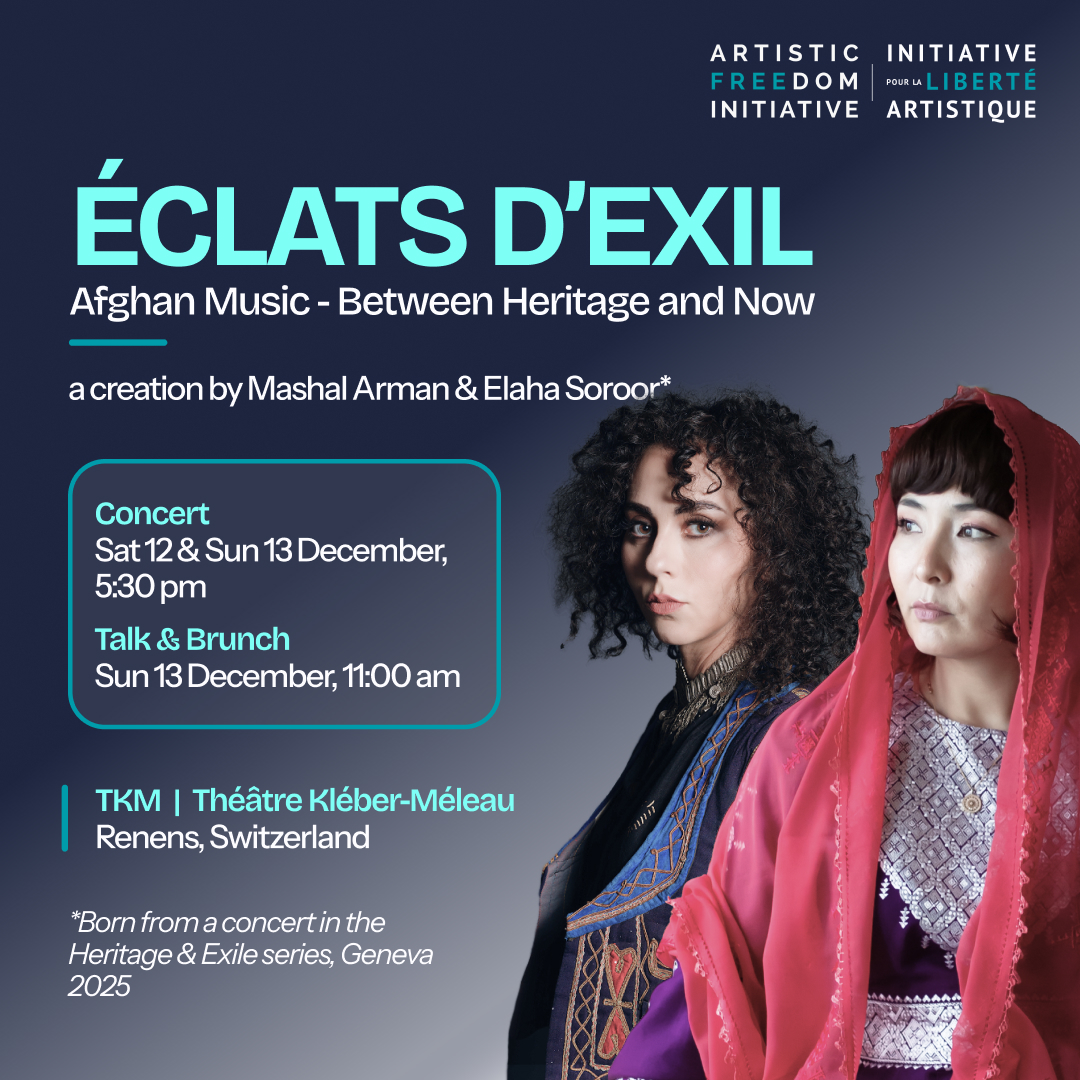
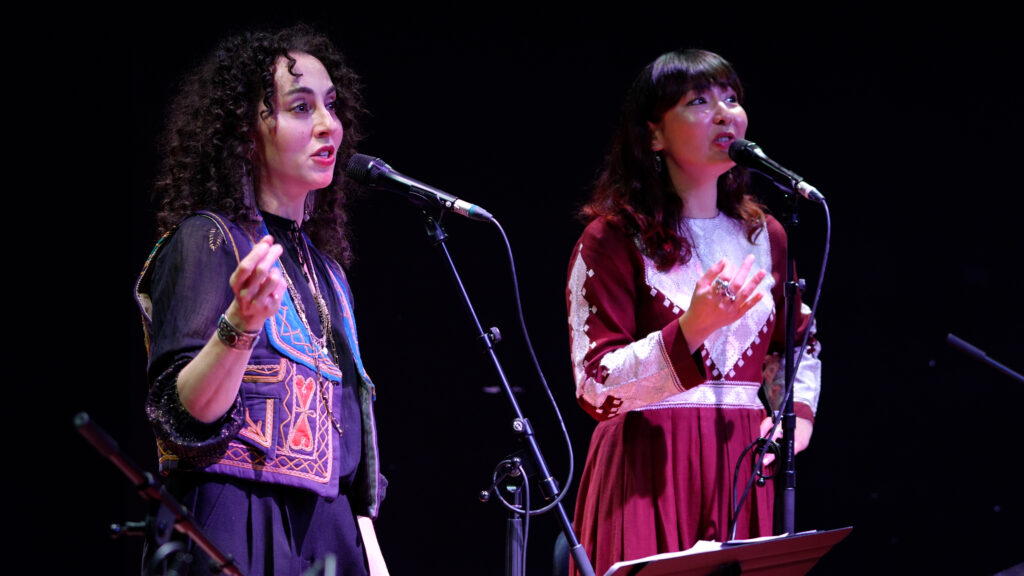
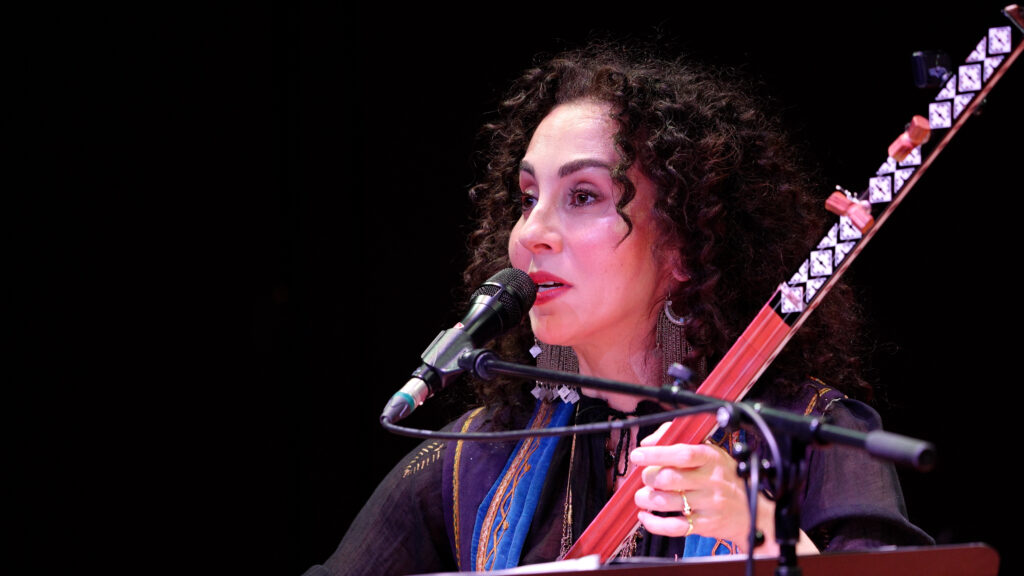
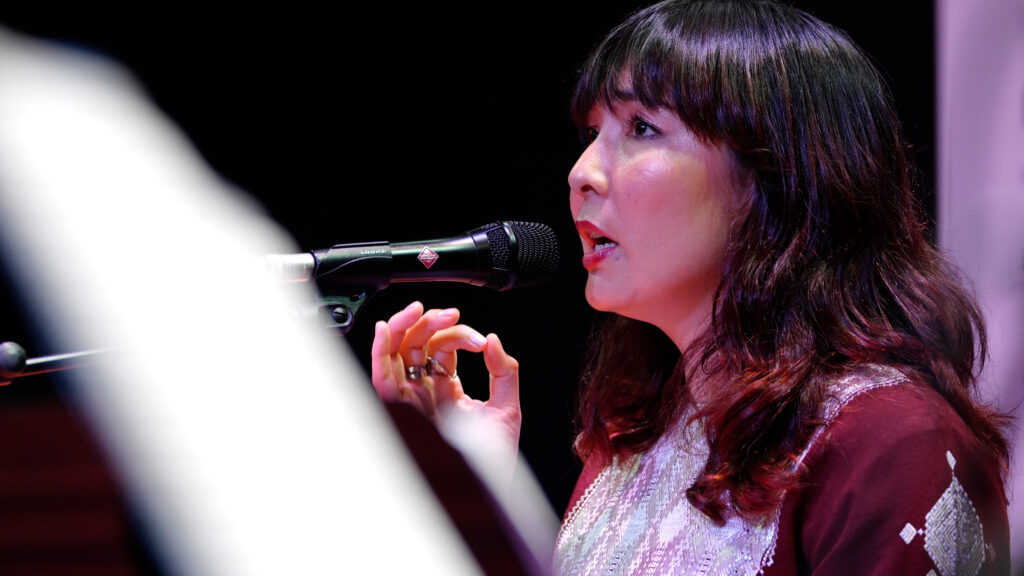
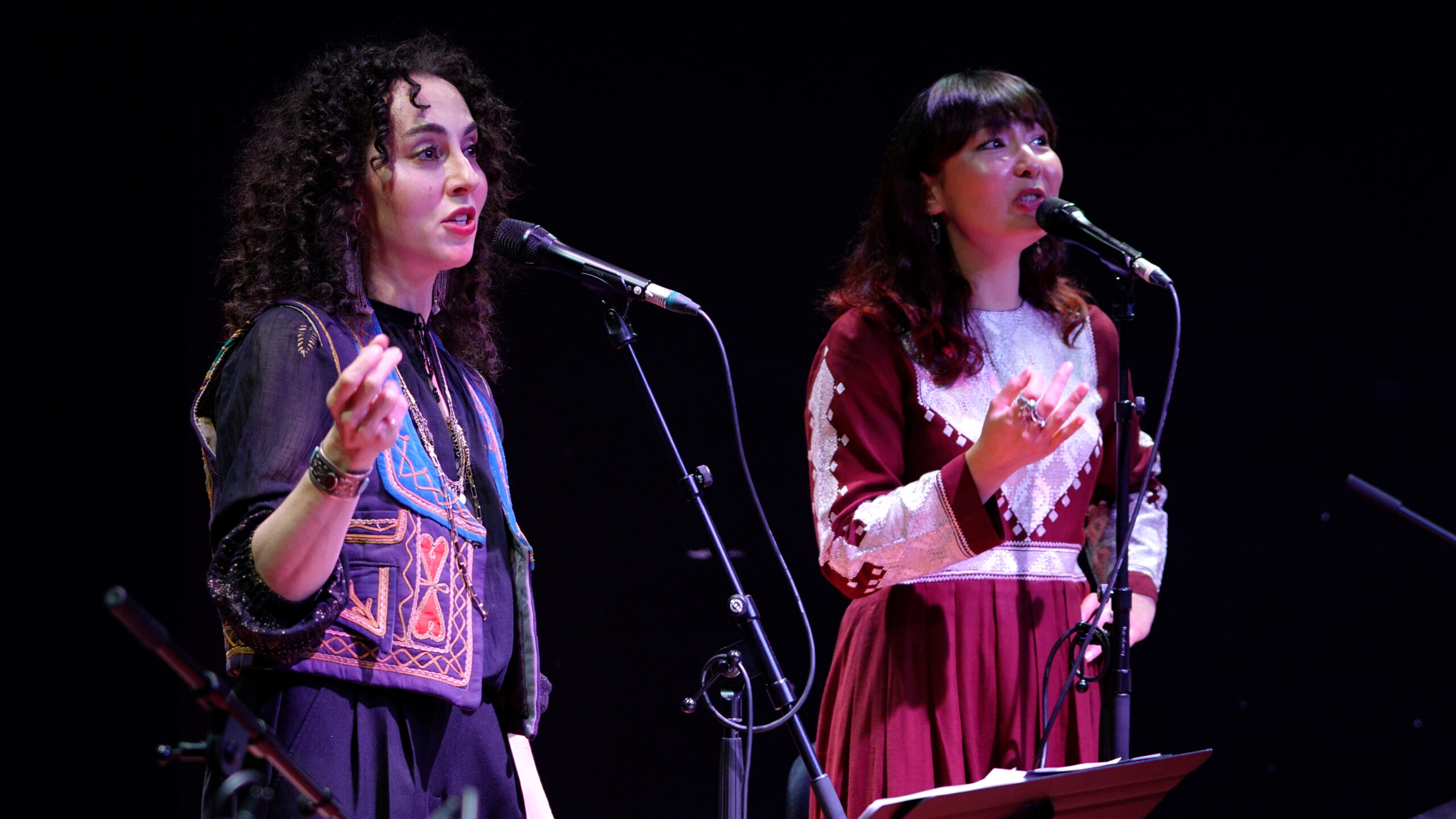
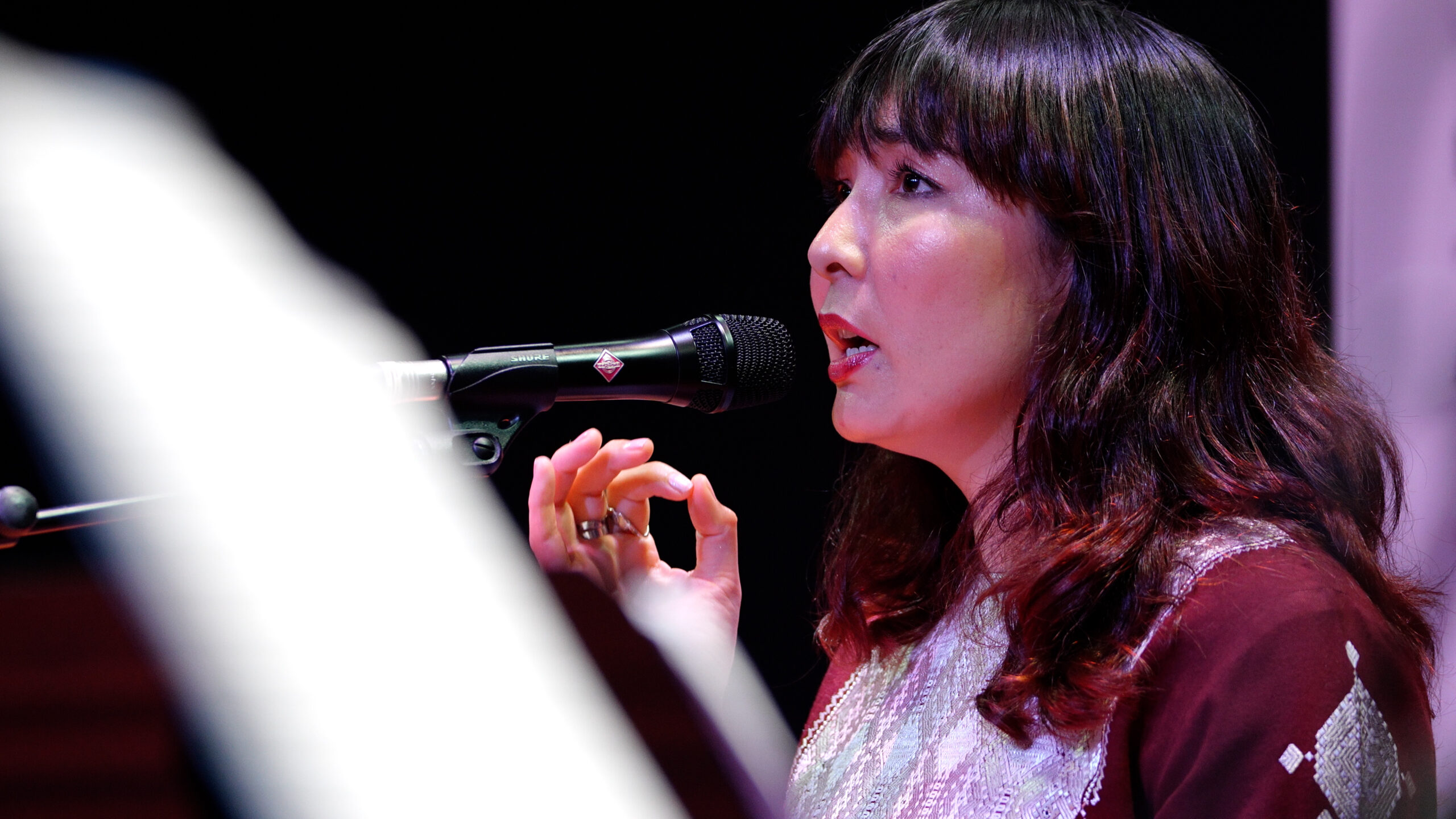
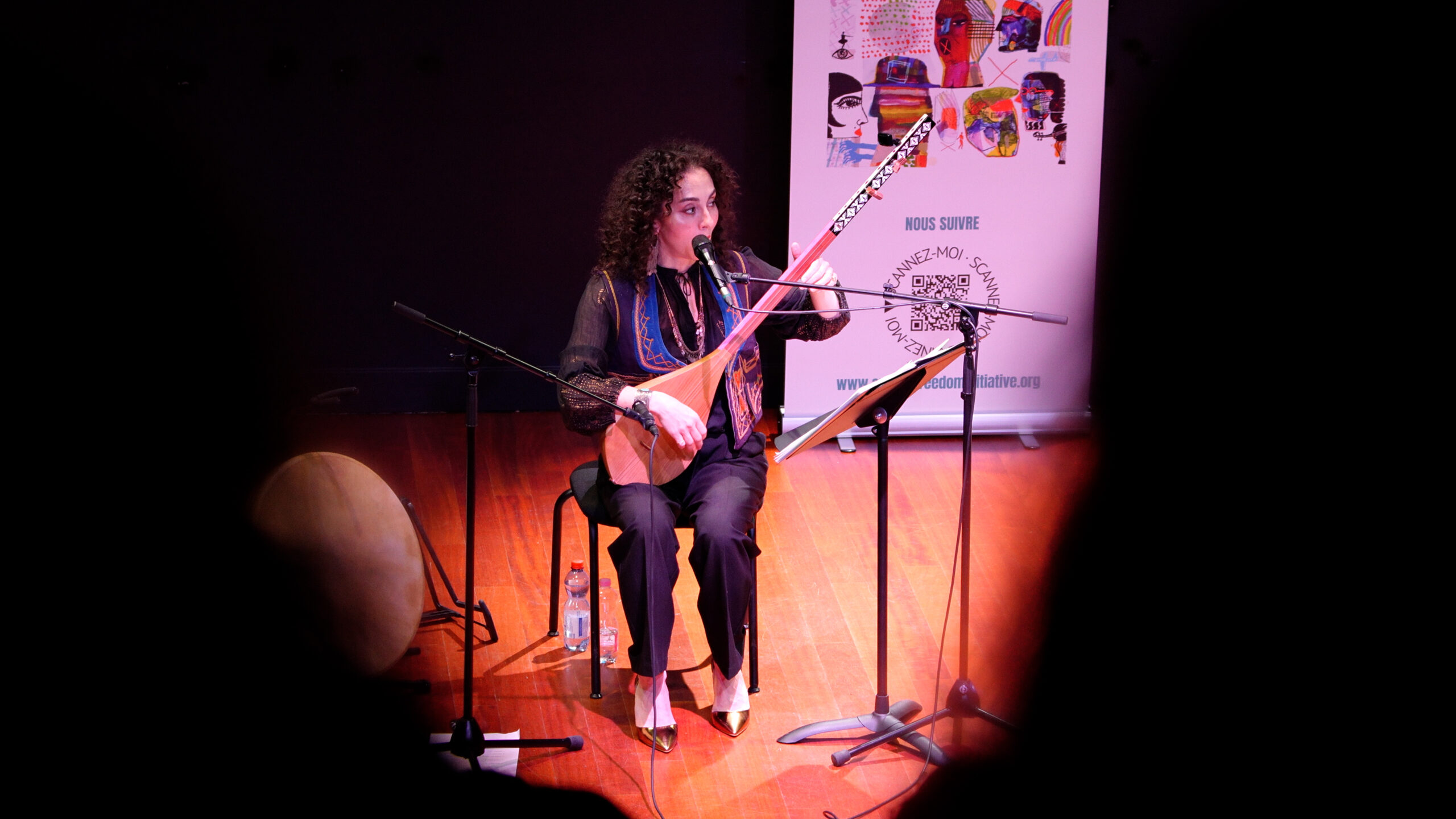
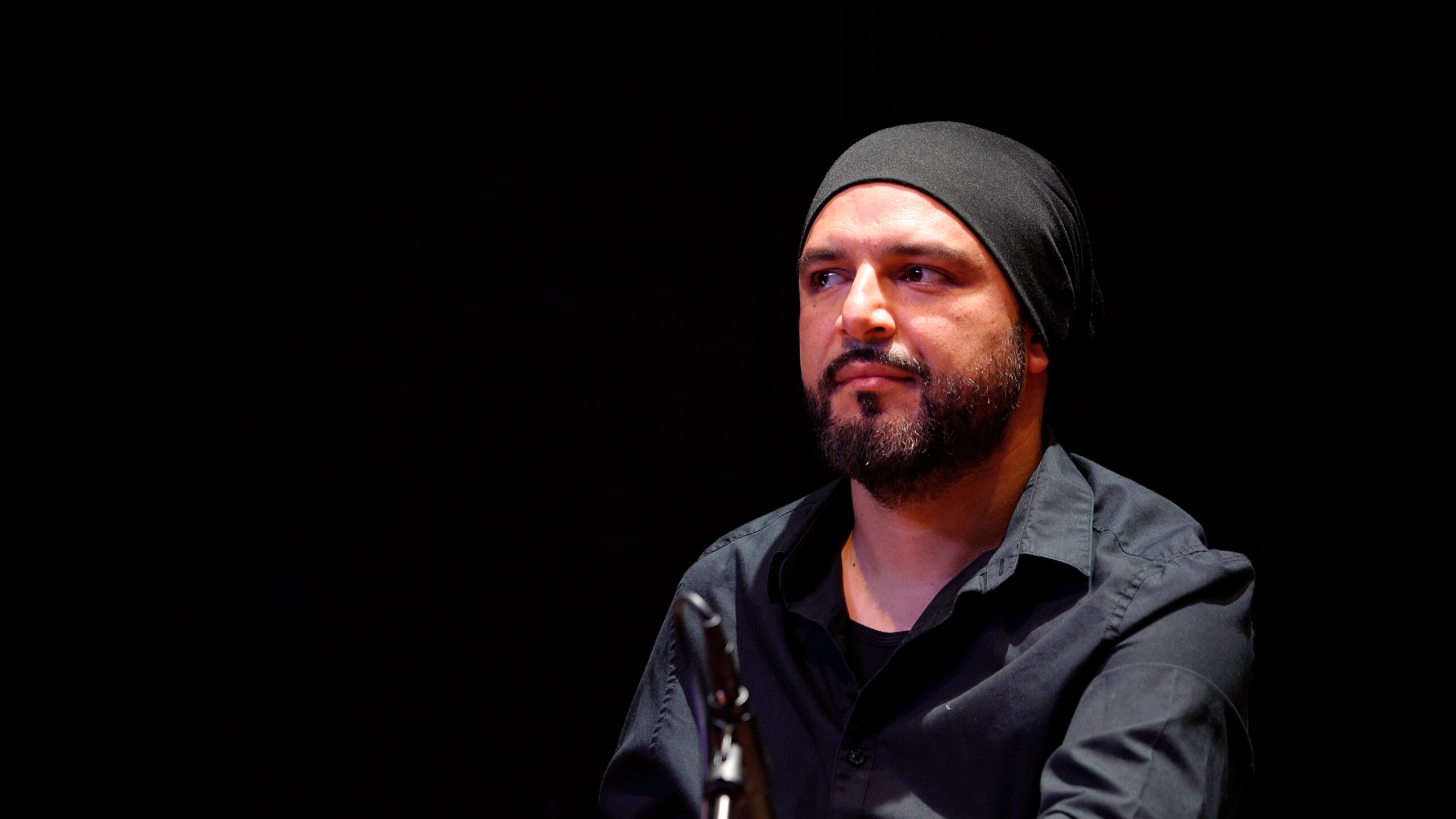
Éclats d’exil – Afghan Music, Between Heritage and Now is a creation by mezzo-soprano and composer Mashal Arman and singer and composer Elaha Soroor. Mashal Arman moves between operatic repertoire and Afghan folk and sacred songs. Elaha Soroor, a leading voice of Hazara culture, draws on tradition and contemporary composition. Together, they bring Afghan musical heritage to the stage with a contemporary, female voice.
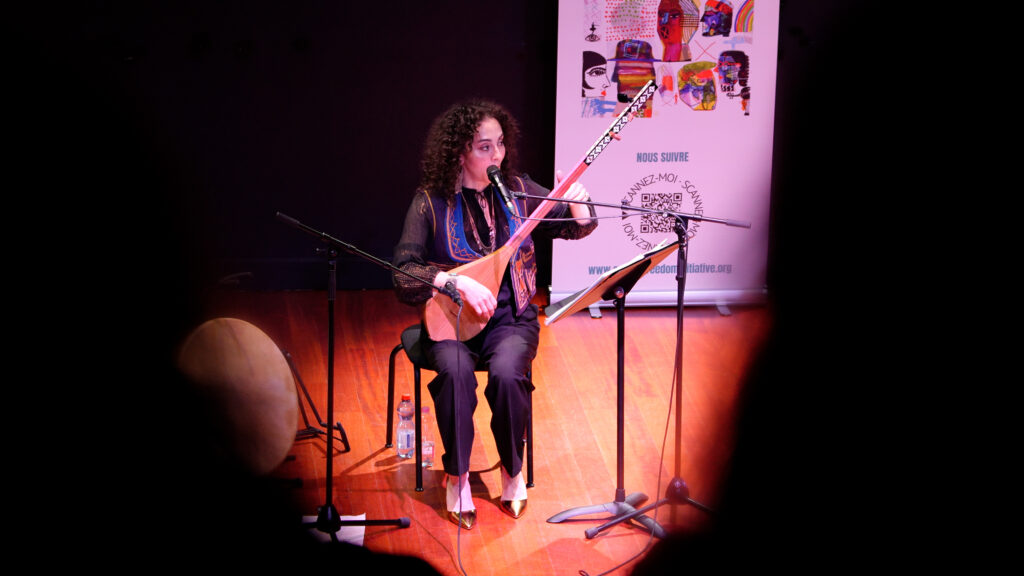
The project was born from a concert of the Heritage & Exile concert series, organised by AFI/ILA at the Salle de Agostini of the Conservatoire Populaire de Genève on 25 May 2025, where the two artists performed together for the first time. Éclats d’exil is its direct continuation, presented at the Théâtre Kléber-Méleau (TKM), in Renens (Lausanne).
As music and women’s voices face restrictions in Afghanistan, exile becomes a place of creation and transmission.
The Programme
Performances
- Saturday 12 December, 5:30 pm
- Sunday 13 December, 5:30 pm
Talk & Brunch
- Sunday 13 December 2026, 11:00 am to 2:00 pm
Hosted by Mashal Arman, the TKM and AFI/ILA, the discussion gives audiences, partners and supporters the keys to the Afghan context behind the work. It will address the situation of art and music in Afghanistan since 2021, how artists in exile preserve and renew their heritage, and the place of women’s voices, central to Éclats d’exil. The discussion will be held in French.
The Artists
Mashal Arman
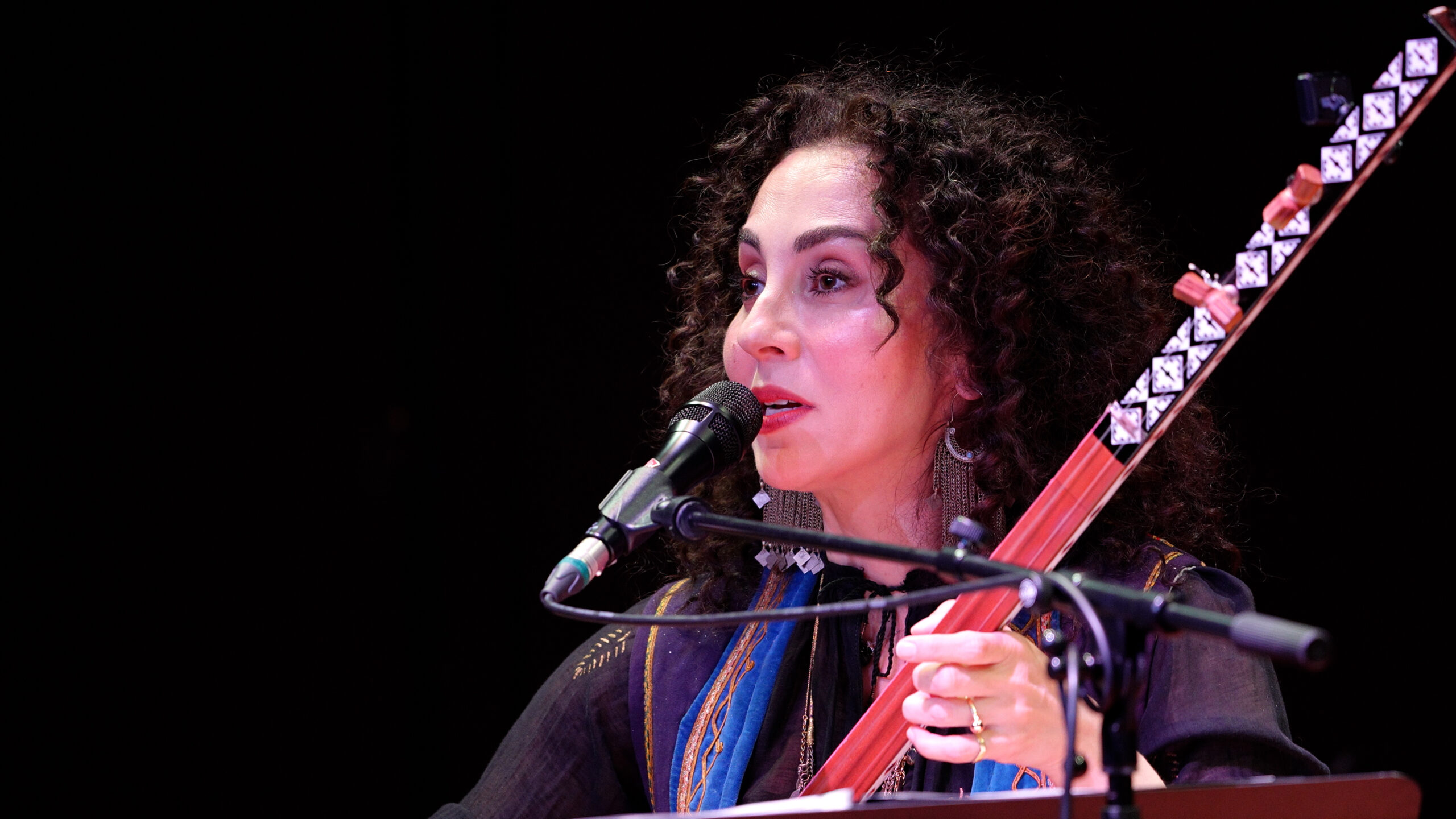
Born in Kabul but raised in Switzerland from childhood, she was introduced to music by her father, Hossein Arman, a renowned artist in the Afghan diaspora. Trained at the Geneva Conservatory, she first excelled as an opera singer and actress, notably at the Lausanne Opera, with the Geneva Camerata, and as part of the Teatro Malandro, before dedicating herself artistically to the survival of Afghan culture, which is threatened with silence in her country of origin. After serving as a member of the Kabul Ensemble, she launched her own trio, The Afghan Project, in 2021, where she explores Afghanistan’s musical heritage while opening it up to new forms of expression, in a spirit of artistic resistance.
Elaha Soroor
Born in Iran to a family of Hazaras who had fled their homeland, Elaha returned to Kabul in 2002 following the fall of the first Taliban regime, where she emerged as one of the first female singers to perform publicly again. In 2008, her appearance on the TV show Afghan Star brought her to the attention of the general public, but her advocacy for women’s rights earned her death threats. Forced into exile, she immersed herself in the London music scene, notably as part of the Kefaya collective, with which she won a Songlines Music Award in 2020. As an ambassador for Hazara culture on the international stage, her career is an ongoing artistic manifesto.
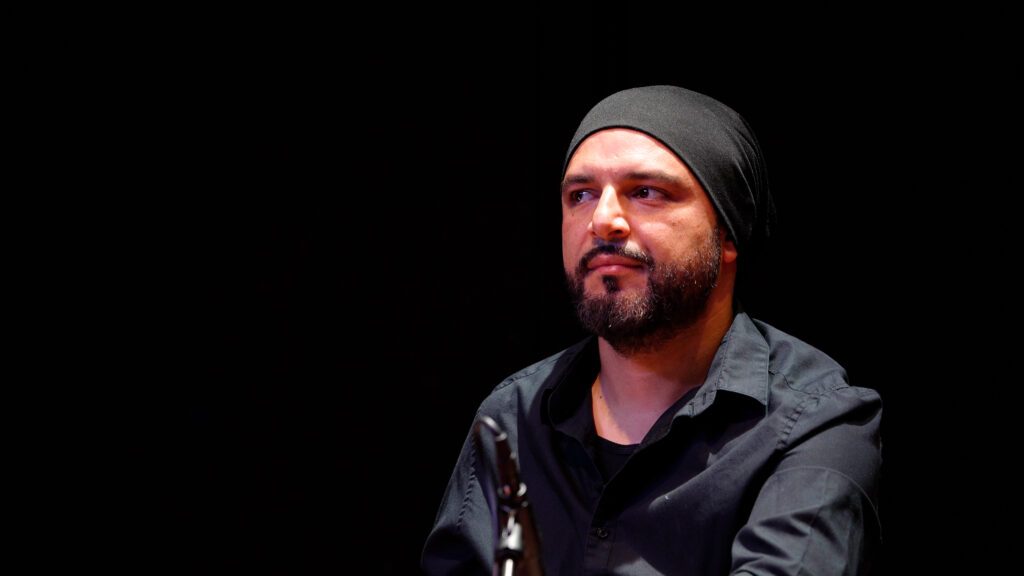
Heritage & Exile, May 2025
AFI/ILA supports Éclats d’exil as part of its Resettlement and Cultural Heritage in Exile programmes, and continues to support artists in exile in resettling and pursuing their careers.