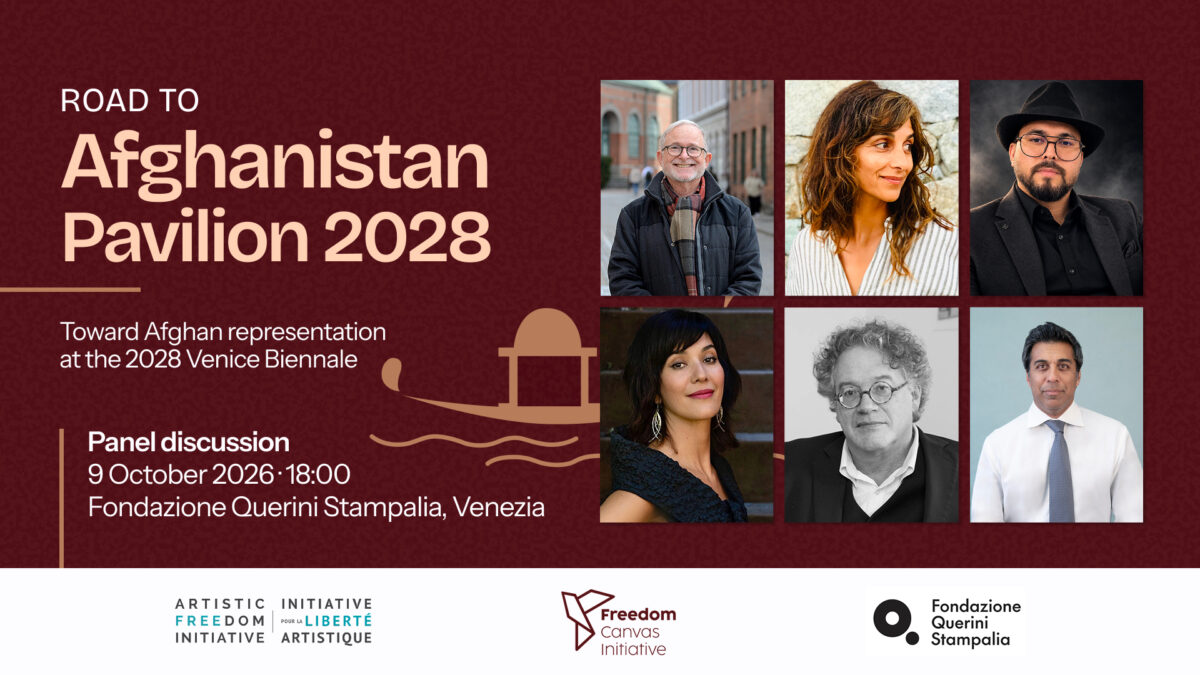
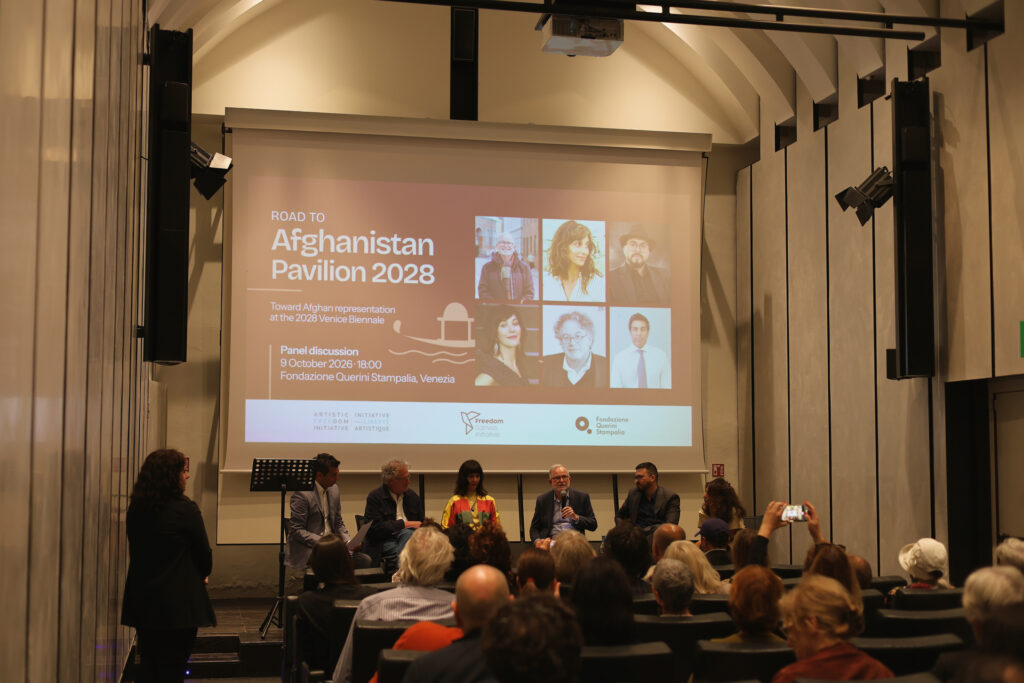
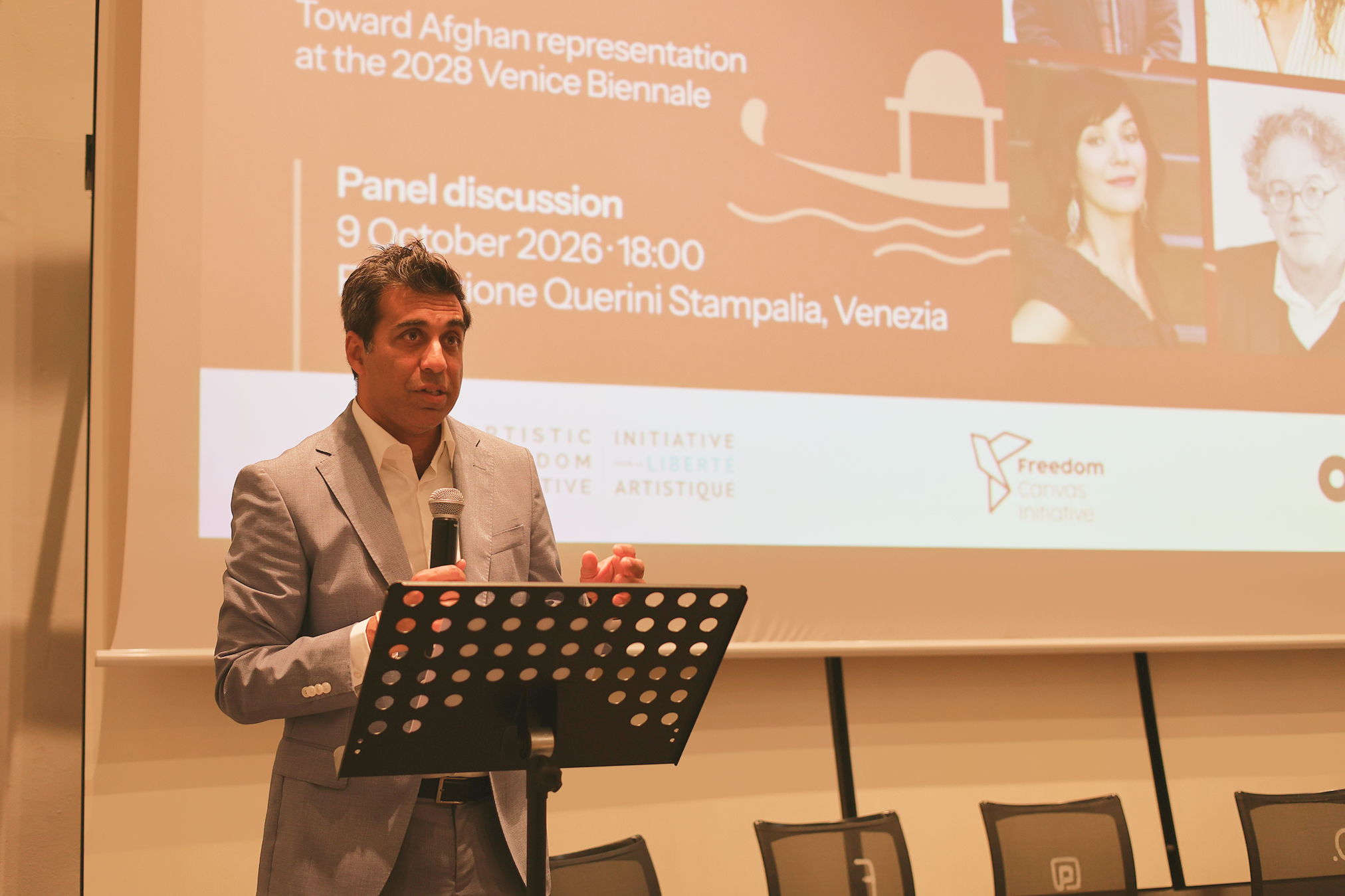
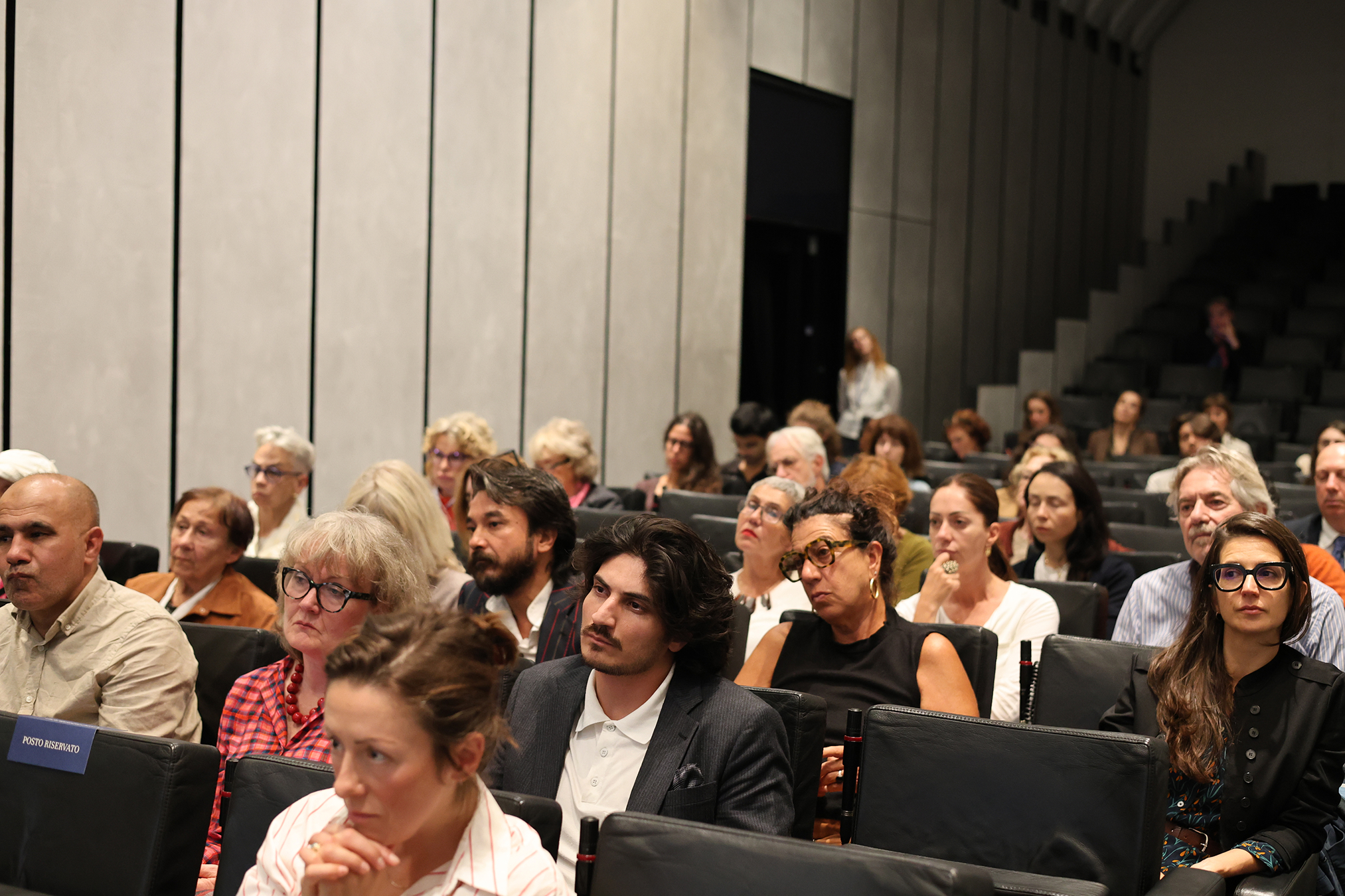
On 9 October 2026, the Afghanistan Pavilion 2028 became public in Venice. At the Fondazione Querini Stampalia, 60 people joined us in the room and 190 followed the livestream from around the world — 250 in all, for an evening that marked the start of a campaign towards representation of Afghanistan at the 2028 Venice Biennale.
An evening of conversation and art
The evening paired a panel discussion with artistic presentations, before closing over a reception. It brought together artists, curators and advocates — some who have built their careers inside the international art world, others who carry the experience of making work far from home.
One point ran through the conversation: Afghanistan has a rich and living artistic community, full of real talent. What it lacks is not ability, but a stage. With no state to carry their work to the world’s great exhibitions, the door to those stages stays closed.
Whether working in the diaspora or inside Afghanistan under Taliban rule, these artists belong on the world’s foremost stage for contemporary art. Securing them that place is what the Afghanistan Pavilion 2028 sets out to do.
Watch the full panel
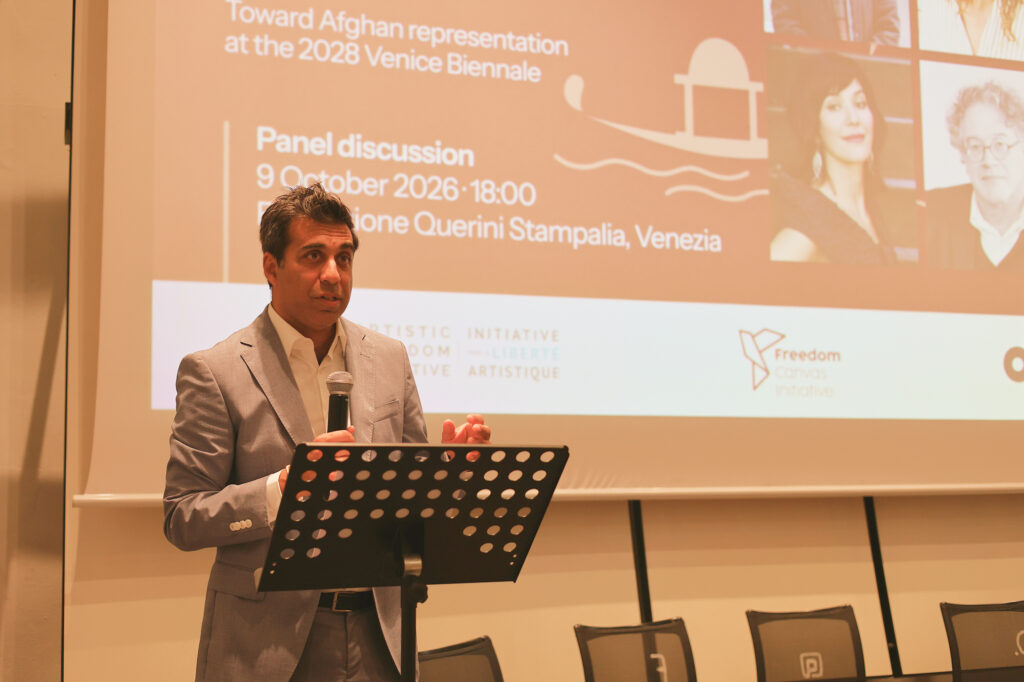
In pictures
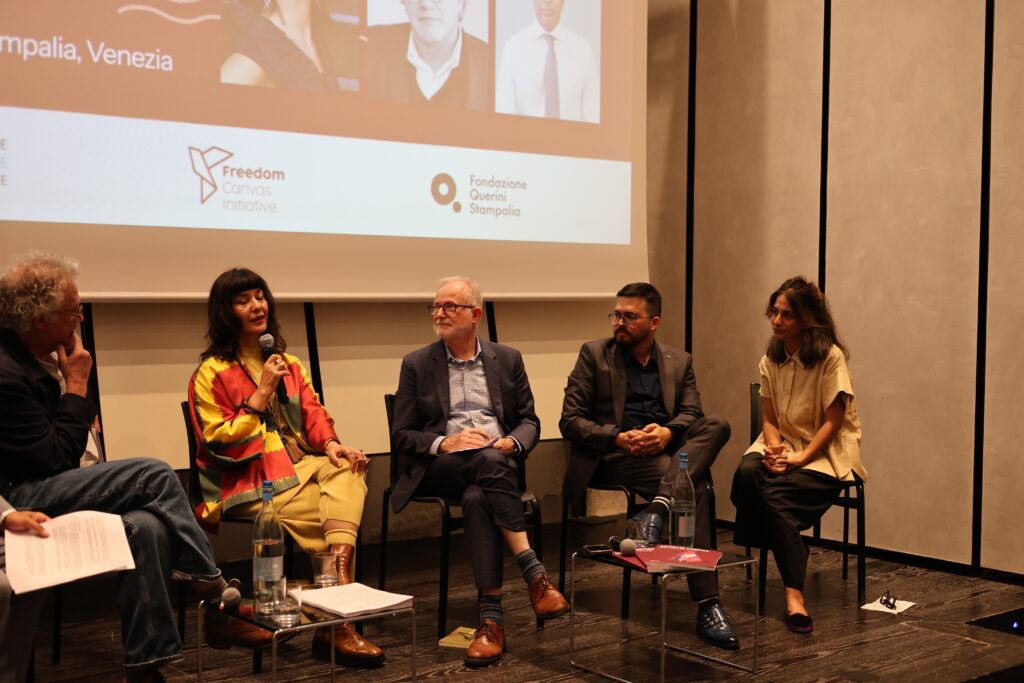
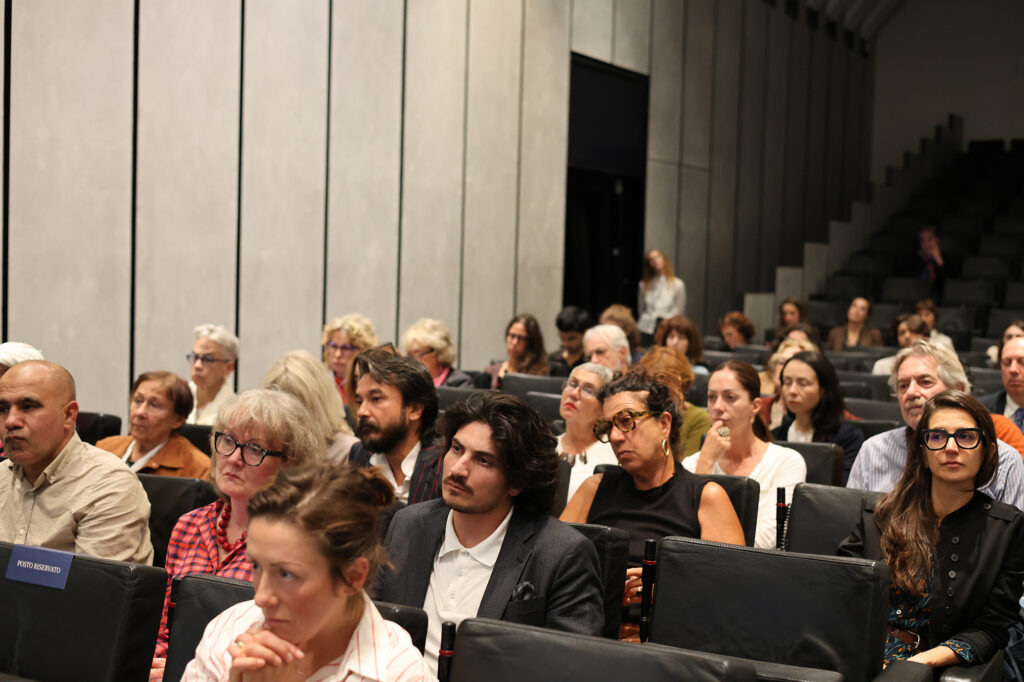
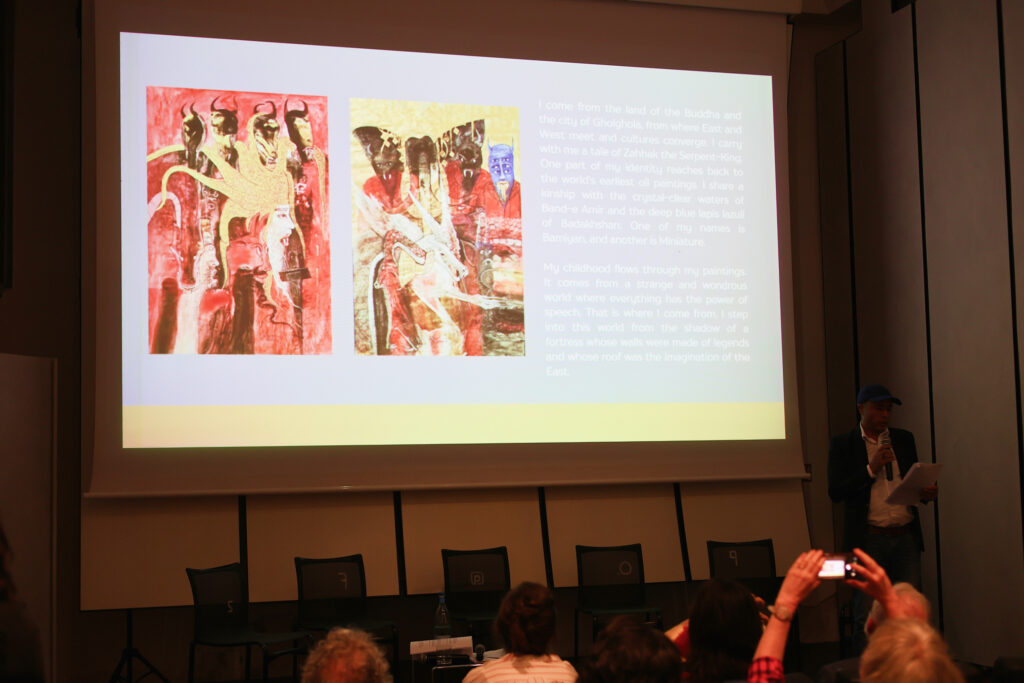
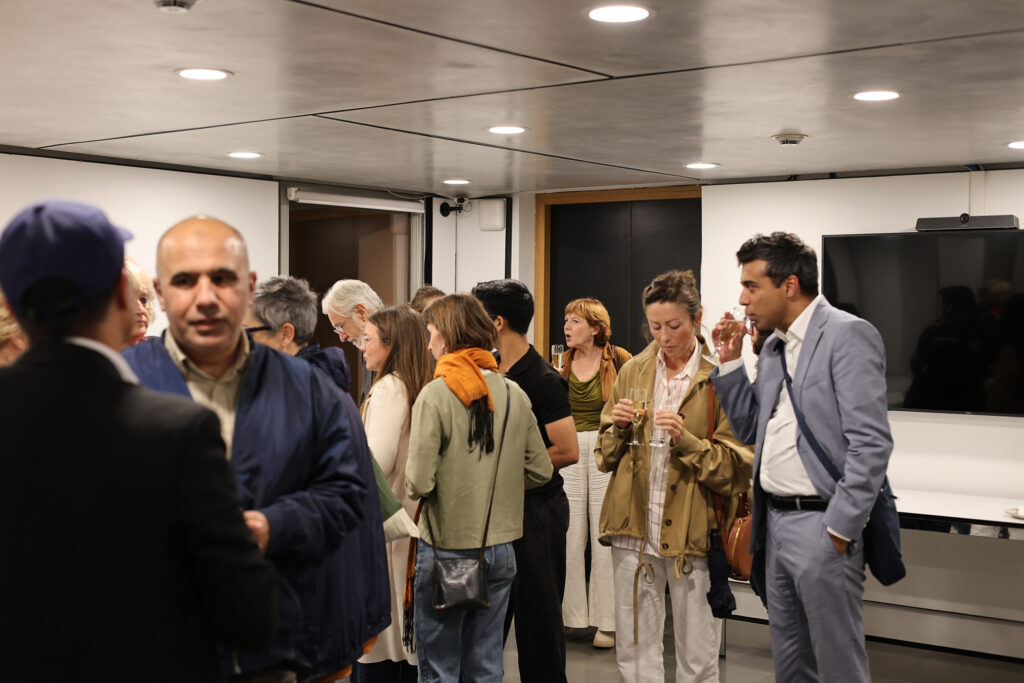
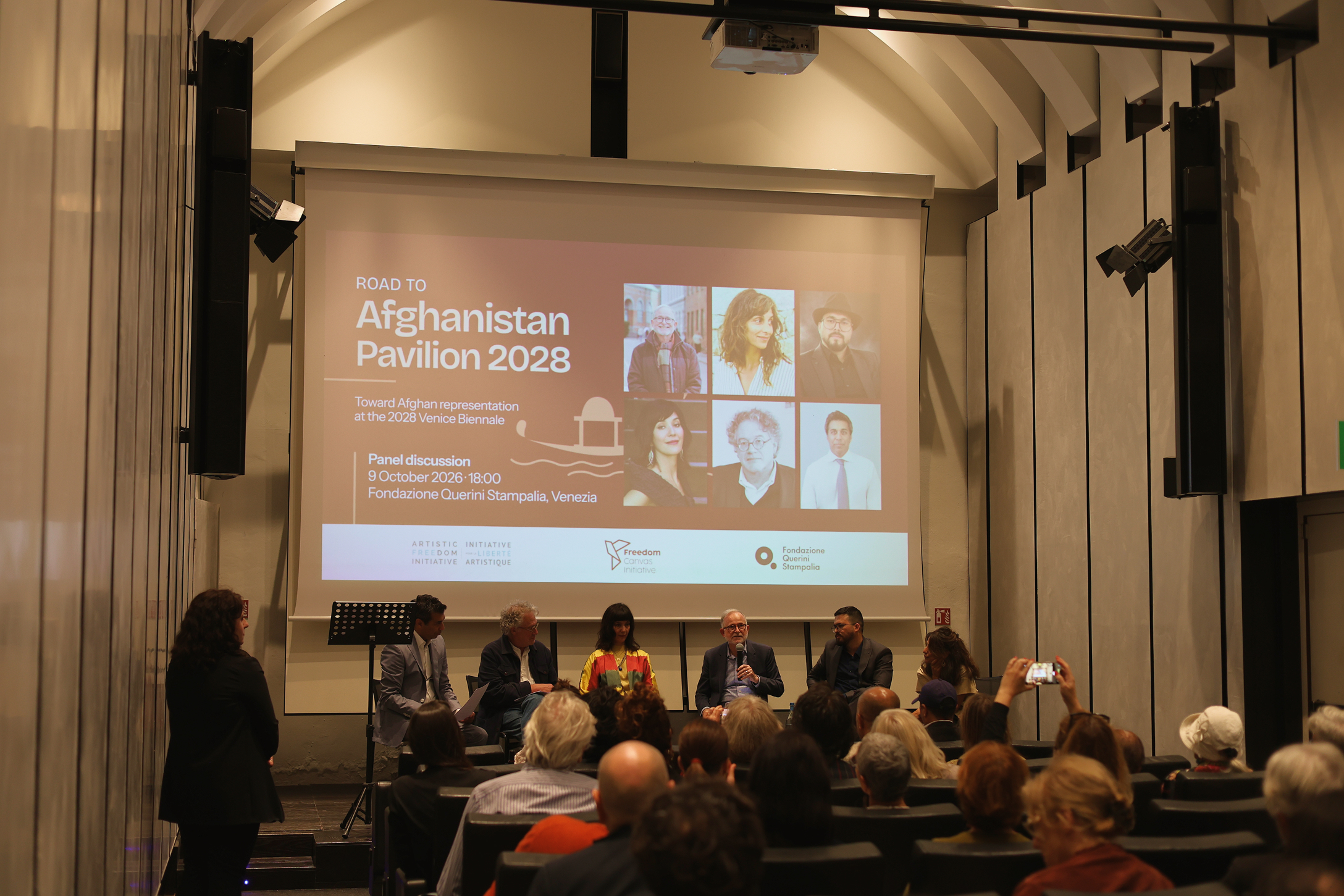
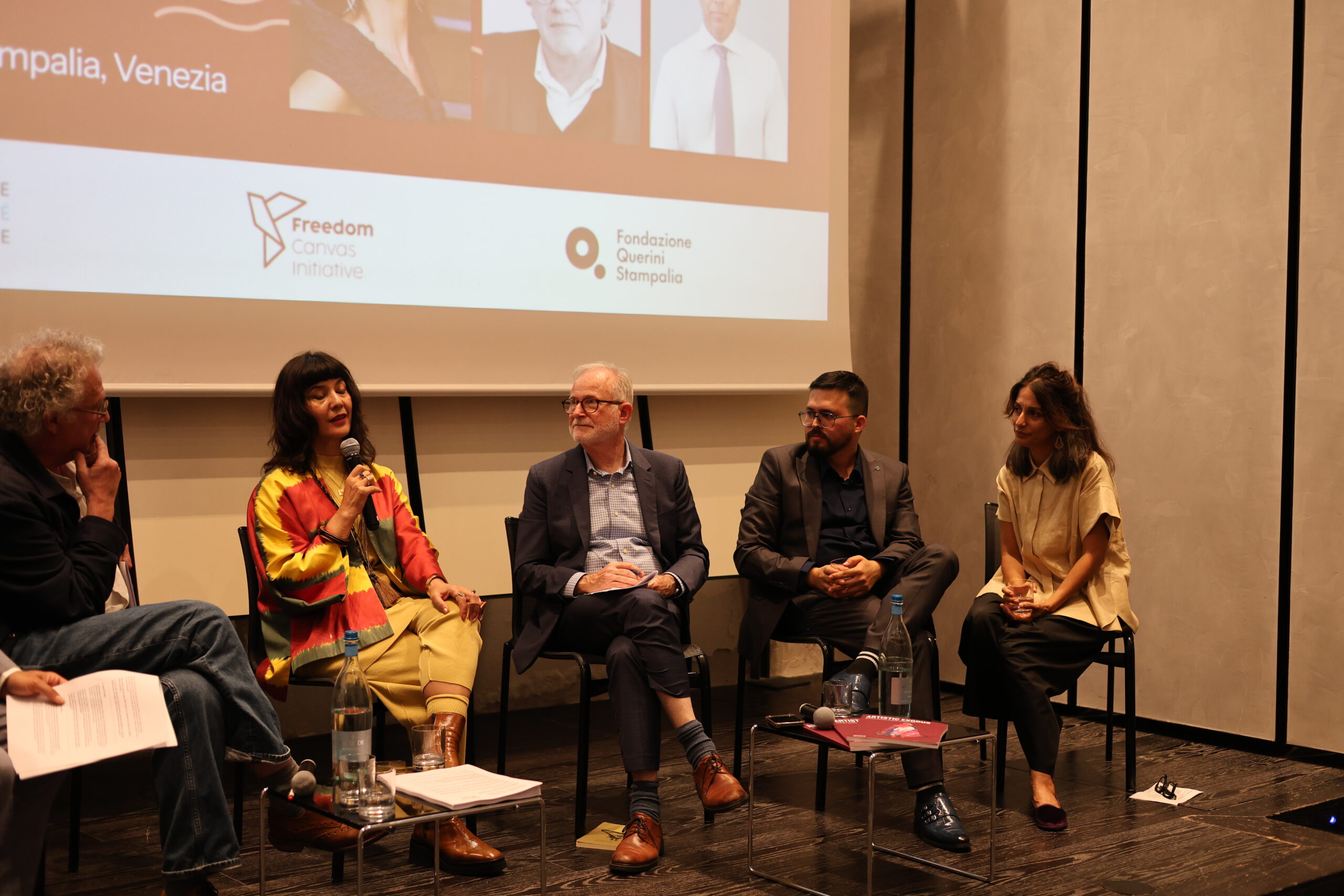
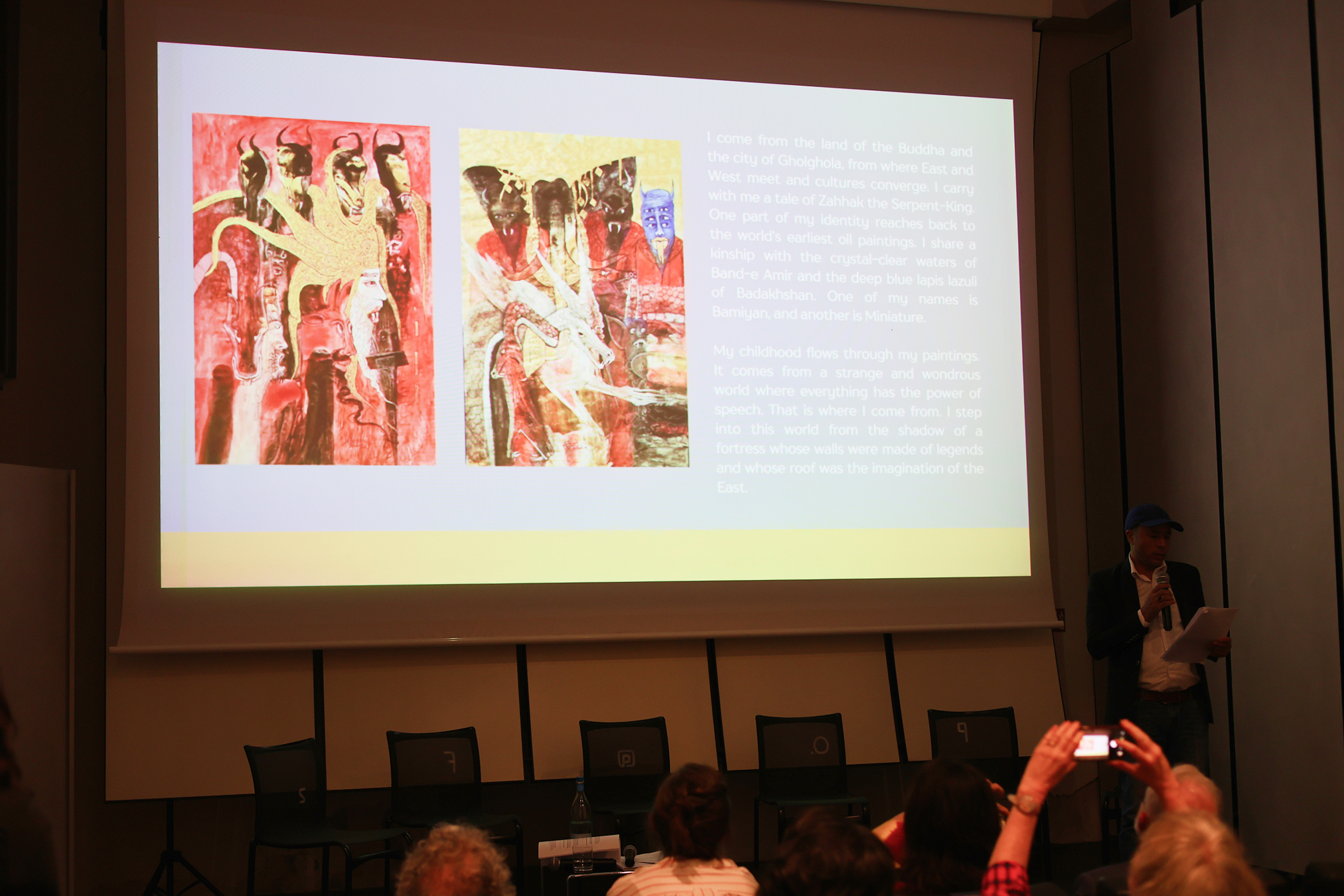
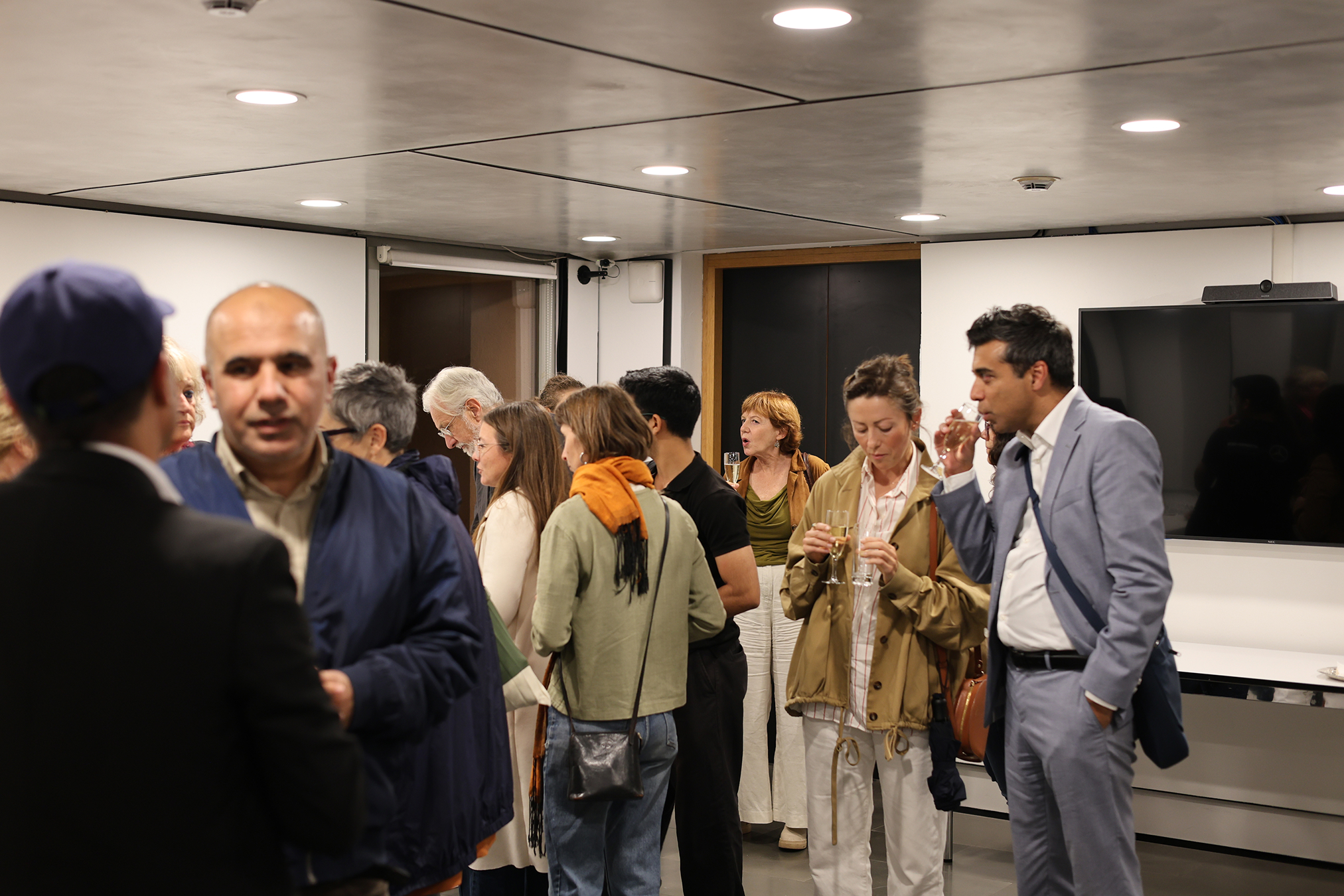
The panellists
Richard Bennett — UN Special Rapporteur on the situation of human rights in Afghanistan.
Jeanno Gaussi — Visual artist. Born in Kabul and raised between Kabul, Delhi, and Berlin, she works across film, video, photography, installation, and text, exploring memory, identity, and place.
Yama Rahimi — Artist, curator, and activist; Executive Director of Freedom Canvas Initiative e.V. (FCI). Trained in film at Kabul University, his curatorial work focuses on Afghan art, censorship, and displacement.
Leeza Ahmady — Curator, educator, and Director of the Asia Contemporary Art Forum. Born and raised in Kabul and based in New York, she curated the Afghanistan and Central Asia Pavilions at the 51st Venice Biennale in 2005.
Jonathan Watkins — Curator and writer. Director of Ikon, Birmingham, from 1999 to 2022, he has curated international biennials and the Iraqi Pavilion at the Venice Biennale in 2013.
With our thanks
To Cristiana Collu and the Fondazione Querini Stampalia for hosting us, and to everyone who joined us, in Venice and online.
This was the first step. The work towards 2028 continues — follow along, and join us on the road ahead.
Organizers & partners
Led by Artistic Freedom Initiative (AFI) and Initiative pour la Liberté Artistique (ILA), in partnership with Freedom Canvas Initiative e.V. (FCI), Germany.